
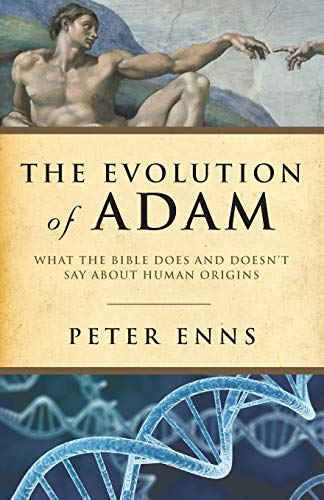
The evolution of Adam : what the Bible does and doesn't say about human origins / Peter Enns
Tipo de material: TextoIdioma: Inglés Editor: Grand Rapids, MI : Brazos Press, ℗2012Fecha de copyright: ©2012Descripción: xx, 172 páginas : 22 cmTipo de contenido:
 - 9781587433153 (pbk.)
- 158743315X (pbk.)
- 24 G 233.11 EN59e
| Tipo de ítem | Biblioteca actual | Colección | Signatura topográfica | Copia número | Estado | Fecha de vencimiento | Código de barras | |
|---|---|---|---|---|---|---|---|---|
 Libros General
|
Biblioteca FUSBC | Colección General | G 233.11 EN59e (Navegar estantería(Abre debajo)) | Ej. 1 | Disponible | 22898 |
Incluye índices (páginas: 167- 172)
Bibliografía (páginas: 162- 166)
Genesis and the challenges of the nineteenth century : science, biblical criticism, and biblical archeology -- When was Genesis written? -- Stories of origins from Israel's neighbors -- Israel and primordial time -- Paul's Adam and the Old Testament -- Paul as an ancient interpreter of the Old Testament -- Paul's Adam -- Adam today : nine theses.
Primera parte: Génesis: Una historia antigua de la autodefinición israelita -- Génesis y los retos del siglo XIX: la ciencia, la crítica bíblica y la arqueología bíblica -- ¿Cuándo se escribió Génesis? -- Historias de orígenes de los vecinos de Israel -- Israel y el tiempo primordial -- Parte dos: Comprensión del Adán de Pablo -- El Adán de Pablo y el Antiguo Testamento -- Pablo como un antiguo intérprete del Antiguo Testamento -- El Adán de Pablo --
Conclusión: Adán hoy: nueve tesis.
"Can Christianity and evolution coexist? Traditional Christian teaching presents Jesus as reversing the effects of the fall of Adam. However, an evolutionary view of beginnings doesn't allow for a historical Adam, making evolution seem incompatible with what Genesis and the apostle Paul say about him. For Christians who accept evolution and want to take the Bible seriously, this presents a tension that endangers faith. Peter Enns offers a way forward by explaining how this tension is caused not by the discoveries of science but by false expectations about the biblical texts. Focusing on key biblical passages in the discussion, Enns demonstrates that the author of Genesis and the apostle Paul wrote to ask and answer ancient questions for ancient people; the fact that they both speak of Adam does not determine whether Christians can accept evolution. This thought-provoking book reconciles the teachings of the Bible with the widely held evolutionary view of beginnings and will appeal to anyone interested in the Christianity-evolution debate, including college and seminary students in science and religion courses." -- Publisher description.
No hay comentarios en este titulo.