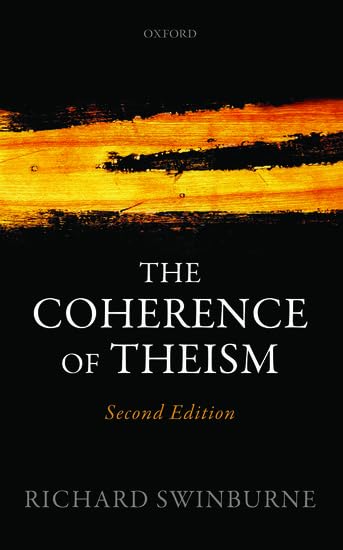
The coherence of theism / Richard Swinburne. :
Tipo de material: TextoIdioma: Inglés Editor: Oxford, United Kingdom : Oxford University Press, ℗[2016]Fecha de copyright: ©2016Edición: Second editionDescripción: vii, 308 páginas ; 23 cmTipo de contenido:
 - texto
- sin mediación
- volumen
- 9780198779698
- 0198779690
- 9780198779704
- 0198779704
- 24 G 212.1 SW978c
| Tipo de ítem | Biblioteca actual | Colección | Signatura topográfica | Copia número | Estado | Fecha de vencimiento | Código de barras | |
|---|---|---|---|---|---|---|---|---|
 Libros General
|
Biblioteca FUSBC | Colección General | G 212.1 SW978c (Navegar estantería(Abre debajo)) | Ej. 1 | Disponible | 9268 |
Cerrar el navegador de estanterías (Oculta el navegador de estanterías)

|

|
|

|
No hay imagen de cubierta disponible |

|

|
||
| G 212.1 R8451c La ciencia descubre a Dios : siete argumentos a favor del diseño inteligente | G 212.1 S83h ¿Hay un Dios? | G 212.1 S83h ¿Hay un Dios? | G 212.1 SW978c The coherence of theism | G 212.1 T19g Does God exist? | G 212.1 T945d Doctrina de Dios | G 212.1 W256r Rational theology and the creativity of God |
Incluye índice (p. 303- 308)
Notas (p. 297- 301)
Parte I / Lenguaje religioso -- Parte II / A Dios contingente -- Parte III / A Dios necesario
"The Coherence of Theism investigates what it means, and whether it is coherent, to say that there is a God. Richard Swinburne concludes that despite philosophical objections, most traditional claims about God are coherent (that is, do not involve contradictions); and although some of the most important claims are coherent only if the words by which they are expressed are being used in analogical senses, this is the way in which theologians have usually claimed that they are being used. When the first edition of this book was published in 1977, it was the first book in the new 'analytic' tradition of philosophy of religion to discuss these issues. Since that time there have been very many books and discussions devoted to them, and this new, substantially rewritten, second edition takes account of these discussions and of new developments in philosophy generally over the past 40 years. These discussions have concerned how to analyse the claim that God is 'omnipotent', whether God can foreknow human free actions, whether God is everlasting or timeless, and what it is for God to be a 'necessary being'. On all these issues this new edition has new things to say."-- From the publisher.
No hay comentarios en este titulo.